Heart of the Beast (Review): A Survival Story Where Silence Speaks Louder Than Words
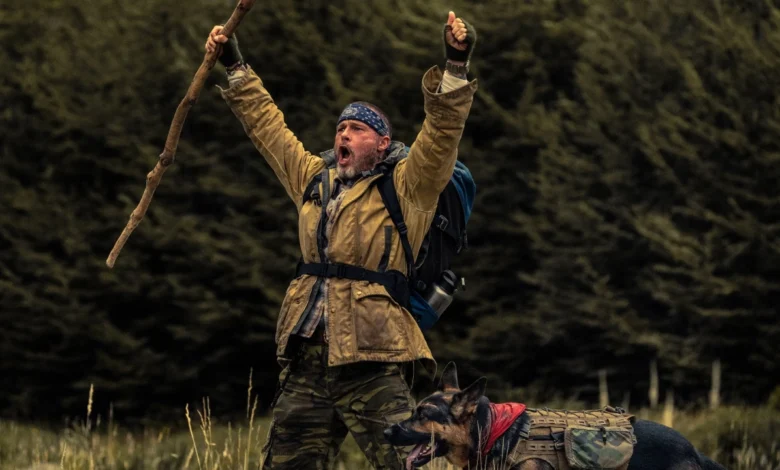
Some survival films throw everything at you — explosions, chase sequences, back-to-back close calls. Heart of the Beast takes the opposite route, and it’s better for it. This 1-hour-45-minute drama strips survival storytelling down to its rawest form: a man, a dog, and a landscape that doesn’t care whether either of them makes it out alive.
The Premise
Brad Pitt stars as James, a Special Forces officer whose plane goes down in the frozen wilderness of Alaska. What follows isn’t a straightforward “man vs. nature” checklist — it’s a slow, grueling fight against the cold, the terrain, and the wild animals that call this unforgiving landscape home. James isn’t alone, though. His combat dog, Odin, survives the crash with him, and their partnership becomes the emotional backbone of the entire film.
The Power of Silence: Minimalist Storytelling
What sets Heart of the Beast apart from typical survival fare is how little it relies on dialogue. There’s no exposition-heavy voiceover explaining what James is feeling or what Odin means to him — the film trusts its audience to read the relationship through glances, body language, and quiet moments of shared exhaustion. It’s a bold choice, and one that pays off. The bond between man and dog isn’t told to you; it’s shown, moment by moment, in the way they lean on each other when neither has the strength left to keep going alone.
And Odin isn’t just a prop for emotional beats — the dog’s performance genuinely carries scenes. There’s an instinctive, almost unscripted quality to how Odin reacts to danger and to James, and it’s easy to forget you’re watching trained behavior rather than something entirely real.
The Alaskan Wilderness: A Character in Itself
The cinematography deserves real credit here. Alaska isn’t just a backdrop — it’s practically the antagonist. Wide, sweeping shots of snow-covered mountains and endless white horizon capture both the staggering beauty and the genuine menace of the environment. The isolation is felt, not just implied, and that sense of “there is no help coming” does more heavy lifting for the tension than any action sequence could.
Performance Spotlight: Brad Pitt Stripped Down
Pitt’s performance leans into physical realism rather than movie-star polish. You see the fatigue in his movements, the pain in how he favors an injury, the slow mental toll of isolation. It’s a committed, unglamorous portrayal of survival — less about heroics, more about endurance.
Is It Family-Friendly? And What’s the Main Theme?
If you’re wondering whether this is one to watch with the kids: yes, largely. This is a character-driven drama rather than a gore-heavy thriller, and it focuses on resilience, companionship, and quiet emotional strength rather than shock value. The central theme is the bond between James and Odin — loyalty and connection tested under the most extreme circumstances, and what it means to survive not just physically, but with something (or someone) to hold onto.
As for the dog: Odin isn’t just along for the ride. He’s protective, intuitive, and consistently portrayed as an equal partner in the survival story rather than a sidekick — arguably one of the film’s strongest elements.
One practical note: the film isn’t in Hindi, but with subtitles it’s an easy watch, since the sparse dialogue means there’s rarely much to keep up with.
Verdict: Who Should Watch This?
Heart of the Beast won’t satisfy viewers craving nonstop action — this is a slower burn, built on atmosphere and emotional weight rather than spectacle. But if you’re drawn to character-driven survival stories, or you’re a sucker for a great “man and his dog” narrative, this one delivers.
Final Score: 4/5 — An engaging, emotionally grounded survival drama that proves you don’t need constant chaos to keep an audience hooked.
Have you watched Heart of the Beast yet? Let us know what you thought of James and Odin’s bond in the comments below.