Admin Menu Editor Pro 2.33.3
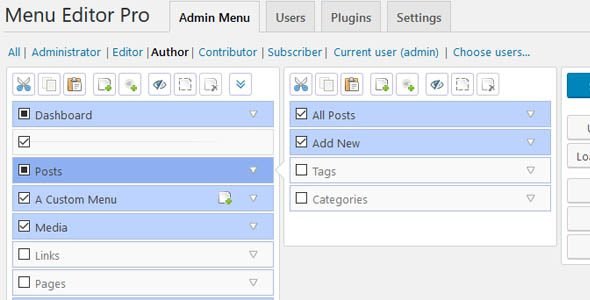
Every WordPress developer and agency manager knows the pain: you hand a client site over with a full, unfiltered WordPress admin menu — and suddenly they’re clicking into areas they shouldn’t touch, getting confused by plugin clutter, or accidentally changing settings that break things. Admin Menu Editor Pro was built to solve this problem permanently.
Admin Menu Editor Pro 2.33.3 is the latest release of the most powerful and established WordPress admin menu customization plugin available. Active on 80,158+ sites, developed by Jānis Elsts with a consistent track record of quality updates stretching back over a decade, Admin Menu Editor Pro goes far beyond simple menu reordering — it’s a complete WordPress admin experience management platform covering menus, roles, content permissions, admin bar, branding, table columns, redirects, tweaks, and more.
Whether you’re building client sites, managing a membership platform, running an agency, or simply trying to bring order to your own cluttered WordPress admin, this guide covers everything you need to know about Admin Menu Editor Pro 2.33.3 — what’s new, the complete feature set, pricing, and where to download it.
What Is Admin Menu Editor Pro?
Admin Menu Editor Pro makes WordPress simpler and easier to use for clients. It lets you manually edit the WordPress dashboard menu — reordering items, showing or hiding specific entries, changing permissions, and much more. But the plugin’s scope extends well beyond its name.
Despite the name, this plugin is not limited to just editing the admin menu. You can also create login redirects and logout redirects, manage role capabilities, control content visibility per post, customize the admin bar, white-label WordPress with custom branding, hide or reorder admin table columns, and configure dozens of targeted “tweaks” that fine-tune the WordPress admin experience for different user roles.
Admin Menu Editor Pro is developed and maintained solely by Jānis Elsts, a highly regarded solo WordPress developer known for his meticulous attention to detail, thorough documentation, and exceptionally responsive support. The plugin has been in active development for over a decade and remains one of the most technically sophisticated WordPress admin customization tools available.
What’s New in Admin Menu Editor Pro 2.33.3?
Version 2.33.3 was released on May 20, 2026 — just two days before this guide was written, making it the freshest possible release.
Version 2.33.3 (May 20, 2026) — WP 7.0 Compatibility & Stability
WP 7.0 Compatibility — Fixed invisible buttons in the license information screen under WordPress 7.0. This ensures the plugin’s license management UI remains fully functional on the latest WordPress major version.
Menu Heading Border Fix — Fixed a potential issue with upgrading from 2.33 where, if you had previously enabled the “Bottom border” option for menu headings, the headings would get all four borders in 2.33.2 instead of just a bottom border. The widths of other borders now correctly default to zero.
Long Role Names Fix — Fixed long role names making the role sidebar in the “Roles” tab very wide when a user is selected — improving usability on sites with verbose custom role names.
Elementor Conflict Fix — Fixed a minor conflict with Elementor that made the allow/deny icons in the “Content Permissions” panel appear blue instead of their intended colors.
PHP 8.5 Compatibility — Fixed a number of PHP 8.5 deprecation notices about SplObjectStorage, ensuring forward compatibility as PHP 8.5 becomes more widely deployed.
Version 2.33.2 (May 17, 2026) — Critical Cache Hotfix
A hotfix for a cache invalidation bug that caused pre-existing menu heading styles to stop working on sites that also had other custom styles for the admin menu. This was a targeted, high-priority fix released the same day as 2.33 and 2.33.1 to address a regression introduced in the major 2.33 release.
Version 2.33.1 (May 17, 2026) — WP 7.0 Default Roles & Menu Heading Fix
Added default role capability data for WordPress 7.0 — these are used by the “Reset roles” feature in the “Roles” tab, ensuring role resets use accurate WordPress 7.0 baseline capabilities.
Fixed the “Menu Headings” dialog not opening on the first click on some existing installations. This was caused by an outdated version of a module being cached in the browser.
Version 2.33 (May 17, 2026) — A Major Feature Release
Version 2.33 was the landmark release underpinning the entire 2.33.x series, and it delivered several significant additions:
Reworked Menu Heading Styles — Menu heading styles have been significantly reworked and expanded. If you’ve previously set up custom heading styles, you may need to review and update those settings after upgrading.
Advanced Table Element Hiding — Added the ability to hide more table elements like row actions and the “Bulk Actions” box. These new settings appear in the “Tables” tab. The plugin detects available elements when you visit the relevant admin page, so if you don’t see new settings, navigate to the page that shows the table and then return to the “Tables” tab.
Improved SVG Menu Icon Support — It was already possible to use SVG icons for admin menu items, but users had to manually encode them in the format WordPress expects. Now the icon selector has a new “SVG” tab — just paste the SVG code in the text box and click “Apply.” A genuinely welcome improvement for users with custom brand icons.
Letter Spacing Setting — Added a letter spacing setting to various “Font” panels, giving more precise typographic control over admin menu text.
Visual Border Width Indicators — Added visual side indicators to border width controls for a clearer UI when configuring menu borders.
WP 7.0 Layout Fixes — Fixed a number of layout issues and visual bugs that only appeared in WordPress 7.0, ensuring compatibility with the latest WordPress major version.
WooCommerce 10.6.0 Count Bubble Fix — Fixed the [ame-count-bubble] shortcode not displaying the “WooCommerce → Orders” bubble from WooCommerce 10.6.0.
Renamed “Columns” Tab to “Tables” — Renamed because it now shows more admin table settings, not just table columns.
Version 2.32 (February 20, 2026) — Roles Tab Redesign & Separator Styles
Capability Badges in Roles Tab — The number of enabled capabilities is now shown as a colorful badge, with a tiny progress bar for partially-enabled categories. Toggle this new style on/off by clicking the gear icon next to the “All” category.
Inset and Outset Separator Styles — Added new visual options for menu separators.
WooCommerce & Plugin Conflict Fixes — Fixed conflicts with “WooCommerce Product Options” and “WooCommerce Quantity Manager.” Fixed a conflict with ActivityPub 7.8.5. Fixed a conflict with an unidentified issue with meta cap detection. Fixed role names showing up in the “Capabilities” field in user profiles. Fixed users showing as “missing” in the “Redirects” tab when the site has more than 50 users.
Version 2.31 (January 22, 2026) — Role Export/Import & Toolbar Visibility
Role Export/Import — Export and import role data across sites. The import option is disabled by default (to prevent accidental permission overwrites) but can be enabled with a click. Choose which roles to import for fine-grained control.
Active Modules Export/Import — Export and import the list of active AME modules across site configurations.
Separate Toolbar Visibility Settings — Added separate Toolbar visibility settings for the dashboard and the front end, giving more nuanced control over when the admin bar appears.
“Other Roles” Field and User Profile Links — Added an “Other Roles” field and an “Edit” link to user profiles, and a “Capabilities” link to users in the “Users” table.
PHP Version Requirement Update — Further increased required PHP version from 7.1 to 7.4.
Version 2.30 (September 8, 2025) — Quick Search Power Upgrade
Quick Search Enhancements — Can now search posts (by title) and users (by login, email, or display name). Press Ctrl + Enter to open the selected search result in a new window or tab. Quick Search remembers recently used items per user (previously it preloaded the same recent items for all users).
Gutenberg Welcome Guide Tweak — Added a tweak that disables the Gutenberg Welcome Guide — a small but much-appreciated quality-of-life addition for sites where you never want that introductory overlay appearing.
Version 2.29 (May 22, 2025) — Columns Tab, New Gutenberg Tweaks & Profile Field Detection
New “Columns” Tab — Lets you hide and reorder table columns in admin tables like “Posts → All Posts.” Plugin-created tables are also supported.
New Gutenberg Tweaks — Disable block locking/unlocking and disable access to the Code Editor and “Edit as HTML” option.
Plugins Page Tweaks — Move active plugins to the top of the plugin list, or select the “Active” filter by default.
Automatic Profile Field Detection — The plugin now automatically detects user profile fields so they can be hidden in the “Tweaks” tab, replacing a limited set of predefined options with dynamic detection.
The Complete Admin Menu Editor Pro Feature Set
1. Role-Based Menu Permissions — The Core Feature
Change menu permissions with just a couple of clicks. Click a role, uncheck the menu items that you want to hide, and check the ones that you want to show.
This is the foundational capability that makes Admin Menu Editor Pro indispensable for client sites, membership platforms, and multi-author WordPress installations. Key capabilities include:
You can also change permissions for individual users. For example, you could hide a menu from everyone except yourself, or give a user access to a specific admin page without changing their role.
The Pro version goes further: you can set the capability of a menu to user:username to make that menu inaccessible to everyone except that user, or not:user:username to hide it from a particular user. You can also combine multiple capability checks and usernames, use advanced capability syntax, and more.
2. Drag-and-Drop Menu Organization
Make WordPress easier to use by moving frequently used menu items to the top. You can also move menu items from one submenu to another, or to the main menu. Want a top-level link to “Add New Post” or to a specific plugin? You can do that. Got an unruly plugin that puts its admin page in the wrong place? Move it to “Settings” instead.
This drag-and-drop system works across menu levels — items can be promoted from submenu to main menu, or demoted from main menu to submenu. The result is an admin interface that’s organized around how you and your clients actually work, not around how each plugin’s developer decided to place their menu item.
3. Full Menu Item Customization
Customize every aspect of a menu item — title, URL, CSS classes, icon, colors, target behavior, and more.
The plugin comes with a large collection of icons from the Dashicons and FontAwesome icon fonts. You can upload your own PNG or GIF icons through the Media Library, or enter the icon URL manually. You can also add icons to submenu items. The 2.33 update added a dedicated SVG tab in the icon selector for easy SVG icon support — just paste the code and click Apply.
Edit the background, text, icon, and highlight colors — apply changes to the entire admin menu or customize individual items independently.
4. Create Custom Menu Items
You can add your own links to the admin menu. You can also make a custom menu that embeds the contents of a post or page in the WordPress admin. Finally, it’s possible to create non-clickable items, which can be useful for things like section headers in complex admin menus.
The iframe embedding option is one of Admin Menu Editor Pro’s most valued features for agencies. Let’s say you’re building a site for a non-technical client and you want to make a tutorial page or an external service look like it’s part of WordPress. The “Open in: Frame” option can help with that. It will display the linked page in a borderless frame. For completeness, a “new window” option is also included.
5. Content Permissions — Control Access to Individual Posts
Introduced in version 2.27, Content Permissions is a major capability that extends AME Pro well beyond admin menu management.
The new “Content Permissions (AME)” meta box in the post editor lets you choose which roles will be able to see a post. It also has an “Advanced” tab where you can enable or disable individual permissions like read/edit/delete for each role. Finally, you can control what happens when someone who doesn’t have permission tries to view a post: replace the post content with something else, show a custom error, simulate a “404 Not Found” error, or redirect the user to a custom URL.
If you accidentally change settings in a way that locks you out of a post, you can work around that by going to the “Settings” tab in AME and checking “Disable content permissions enforcement” — this temporarily disables all custom content permissions, allowing you to edit the post and change the settings. This feature can be disabled entirely in the “Settings” tab under “Modules” if you don’t need it.
6. Quick Search — Navigate the Admin with Keyboard Speed
Quick Search is a pop-up search box that searches admin menus. Optionally, it can also search admin pages for specific settings, tabs, filter links, and a few more things.
You can open the search box by pressing the Shift key twice or clicking the search icon in the Toolbar/Admin Bar. For example, if you enable page indexing, you could use the search box to go straight to the “Roles” tab in AME Pro without having to click on “Settings → Menu Editor Pro” first.
Version 2.30 expanded Quick Search to also search posts (by title) and users (by login, email, or display name). Ctrl + Enter opens results in a new tab. Recent items are remembered per user — previously the same recent items were preloaded for all users.
7. Tables / Columns Tab — Hide and Reorder Admin Table Columns
Added in version 2.29 and significantly expanded in 2.33, the Tables tab (formerly “Columns”) lets you hide and reorder table columns in admin tables like “Posts → All Posts.” Plugin-created tables are also supported as long as they use the same WordPress API.
Version 2.33 added the ability to hide more table elements like row actions and the “Bulk Actions” box. The plugin detects available elements when you visit the relevant admin page — so the settings available in the Tables tab are dynamically determined by which pages you’ve visited.
8. Role Editor — Full Capability Management
Admin Menu Editor Pro includes a comprehensive role editor that goes far beyond what WordPress provides natively:
The “Roles” tab shows capabilities organized by category with the number of enabled capabilities displayed as a colorful badge (added in 2.32), with a tiny progress bar for partially-enabled categories. You can toggle the badge and progress bar display from the gear icon.
The Reset Roles feature (added in 2.28) can reset default roles to their WordPress-default capabilities. Unlike some similar plugins, you can choose which roles to reset and don’t lose custom roles. The role list is now sorted — default roles (Administrator, Editor, Author, Contributor, Subscriber) appear in predefined order, with custom roles sorted alphabetically.
Role Export/Import (added in 2.31) lets you export role configurations from one site and import them on another. The import option is disabled by default when importing settings, as accidentally importing wrong role data can affect user permissions.
9. Nav Menus Tab — Control Front-End Navigation Per Role
Added in version 2.26, the Nav Menus tab lets you hide navigation menu items from roles and users. It supports both classic navigation menus and block-based navigation menus used by Full Site Editing (FSE) themes.
This means you can show different navigation items to different user roles on your site’s front end — showing a “Members Area” link only to logged-in subscribers, or hiding a “Vendor Dashboard” link from non-vendor users.
10. Dashboard Widgets Tab — Control Which Widgets Appear
Control dashboard widget visibility per role, reorder widgets with drag and drop, and create custom dashboard widgets. Widget order can be applied site-wide to override individual user preferences.
11. Meta Boxes Tab — Control Content Editor Panels
Control which meta boxes are visible in the post editor for different roles. Hide unnecessary panels from contributors or authors to keep the editing experience focused.
12. Login & Logout Redirects
Create login redirects and logout redirects per role. When a specific role logs in, redirect them directly to their most-used admin page or a custom URL. When they log out, redirect to a custom page instead of the default WordPress login screen.
13. Import and Export Menu Settings
Export your admin menu configuration to a file, then import it on another site. This is invaluable for agencies building multiple client sites with the same admin structure, or for maintaining consistent configurations across a multisite network.
14. Hide Plugins from Specific Users
Hide individual entries on the “Plugins” page. As with menu items, you can hide them from everyone, or only from specific roles or users. This prevents clients from accidentally deactivating critical plugins or being confused by plugin clutter they don’t need to manage.
15. Protect User Accounts
Protect important user accounts from being edited or deleted. This prevents lower-level admins from modifying the site owner’s account or other protected users.
16. Tweaks Tab — Dozens of Targeted Admin Modifications
The Tweaks tab offers a growing library of small but impactful admin modifications that can be enabled per role or globally:
Gutenberg Tweaks: Disable the Gutenberg Welcome Guide, disable block locking and unlocking, disable access to the Code Editor and “Edit as HTML,” hide the Gutenberg options menu.
Plugins Page Tweaks: Move active plugins to the top of the list, or select the “Active” filter by default when opening the Plugins page.
Profile Field Management: The plugin now automatically detects user profile fields so they can be hidden in the Tweaks tab — replacing a limited predefined set with dynamic field detection.
Disable Customizations Per Role: You can disable the custom admin menu for specific roles or users — they will see the default admin menu instead. This doesn’t affect access to AME’s customization features.
17. Admin Customizer — Live Style Preview
The Admin Customizer — introduced in an earlier major release and inspired by WordPress’s Theme Customizer — lets you customize admin styles with live preview. It includes menu style settings and additional customization options with changes reflected in real time as you edit.
18. Toolbar Editor Add-On — Customize the Admin Bar
The optional Toolbar Editor add-on lets you customize the Admin Bar, also known as the WordPress Toolbar. You can hide toolbar items, change their order with drag and drop, rename items, add new links, and more.
Separate Toolbar visibility settings for the dashboard and the front end were added in version 2.31 — giving more nuanced control over when the admin bar is visible in each context.
Version 2.33.1 added default role capability data for WordPress 7.0, and version 2.33.3 fixed a minor conflict with Elementor that affected icon colors in the Content Permissions panel.
19. Branding Add-On — Full White-Label WordPress
Use the Branding add-on to replace the default WordPress branding with your own. You can replace the WordPress logo, customize the login page, change the admin color scheme, hide the WordPress version and core update notifications, and so on.
The Branding add-on is included with the Agency plan and can be purchased separately for Plus and Personal plan holders who want to upgrade.
20. Shortcodes for Dynamic Menu Items
The plugin supports shortcodes anywhere in custom menus — including in the menu title, URL, and other fields:
[wp-wpurl] — WordPress address, [wp-siteurl] — Site URL, [wp-admin] — Admin URL, [wp-name] — Site name, [wp-blogname] — Blog name, [wp-user-login] — Current user’s login name, [wp-user-email] — Current user’s email address.
The [ame-count-bubble] shortcode allows you to take the number bubble from a default menu title and display it in a custom title — for example, keeping the “Orders (5)” count visible in a renamed WooCommerce menu item. Fixed in 2.33 to work correctly with WooCommerce 10.6.0.
Admin Menu Editor Pro vs. Free Version
| Feature | AME Free | AME Pro |
|---|---|---|
| Basic Menu Reordering | ✅ | ✅ |
| Hide/Show Menu Items | ✅ (all users) | ✅ Per role & per user |
| Per-Role Menu Permissions | ❌ | ✅ |
| Per-User Menu Permissions | ❌ | ✅ |
| Export/Import Menu Settings | ❌ | ✅ |
| Drag Items Between Menu Levels | ❌ | ✅ |
| Open Menus in New Tab or iFrame | ❌ | ✅ |
| Content Permissions (Posts) | ❌ | ✅ |
| Quick Search | ❌ | ✅ |
| Tables / Columns Tab | ❌ | ✅ |
| Nav Menus Tab | ❌ | ✅ |
| Role Editor (Full) | ❌ | ✅ |
| Role Export/Import | ❌ | ✅ |
| Login/Logout Redirects | ❌ | ✅ |
| Dashboard Widget Management | ❌ | ✅ |
| Admin Customizer | ❌ | ✅ |
| Toolbar Editor Add-On | ❌ | ✅ (Agency) |
| Branding Add-On | ❌ | ✅ (Agency) |
| Advanced Shortcodes | ❌ | ✅ |
Admin Menu Editor Pro Pricing
Prices for all plans will increase on May 24, 2026. If you already have a license, your renewal price won’t change.
Personal — $39 — Use on 2 sites. Free updates for 1 year. Ideal for freelancers managing a small number of sites.
Plus — $59 — Use on 5 sites. Use on client sites. Free updates for 1 year. The most popular plan for independent developers and small agencies.
Agency — $79 — Use on unlimited sites. Use on client sites. Includes the Toolbar Editor add-on and the Branding add-on. Free updates for 1 year. The complete package for agencies managing many client sites.
Looking for lifetime updates? View lifetime plans — All three license tiers are available as lifetime plans for those who prefer a one-time payment without annual renewals.
All plans are available through adminmenueditor.com.
Who Is Admin Menu Editor Pro 2.33.3 Perfect For?
WordPress Agencies — Have used this plugin on every client site. It works really well. The Agency plan’s unlimited site license, iFrame capability, Toolbar Editor, and Branding add-on cover every client-facing customization need from a single tool.
Membership Site Owners — Your plugin is outstanding and the support is even better. This gives us exactly what we need to have custom dashboard control of our membership sites. I highly recommend this tool for anyone who is looking to bypass WordPress defaults without bogging down your site. Role-based menu permissions, content permissions, and login redirects together create a complete access control system for subscription platforms.
Freelance WordPress Developers — The Plus plan’s 5-site license at $59/year provides excellent value for freelancers building and managing client sites. Export/import menu settings and role configurations speed up new site setup significantly.
WooCommerce Store Managers — The Quick Search, table column hiding, and per-role admin access controls are especially valuable for WooCommerce operations where different team members need access to different parts of the store backend.
Multi-Author Publications & News Sites — Content Permissions (control which roles can view specific posts), combined with role-based menu visibility, creates a professional editorial workflow where contributors only see what’s relevant to their role.
Corporate Intranet & Internal Tool Teams — The iFrame embedding capability and custom menu creation allow businesses to present external tools and intranet resources as seamlessly integrated parts of the WordPress admin interface.
System Requirements
Admin Menu Editor Pro 2.33.3 runs on any standard WordPress environment:
- WordPress: 5.9 or greater
- PHP: 7.4 or greater (PHP 8.5 compatible as of 2.33.3)
- MySQL: Any version supported by your WordPress installation
- Compatible With: WooCommerce, Elementor, Bricks, BuddyPress, LearnDash, LifterLMS, and virtually any well-coded WordPress plugin
How to Install Admin Menu Editor Pro
- Purchase Admin Menu Editor Pro from adminmenueditor.com.
- Download the plugin zip file from the link emailed to you after purchase.
- In your WordPress admin, navigate to Plugins → Add New → Upload Plugin.
- Upload the zip file, click Install Now, then Activate Plugin.
- Navigate to Settings → Menu Editor Pro to begin customizing your admin menu.
- Enter your license key in the Settings tab to receive automatic updates.
- (Agency plan) Install the Toolbar Editor and Branding add-ons from your account area for the complete Admin Menu Editor Pro experience.
The free version of Admin Menu Editor is available on WordPress.org at wordpress.org/plugins/admin-menu-editor/ — installing the free version first is an excellent way to explore basic functionality before upgrading to Pro.
An online demo is available at amedemo.com — log in as the “demo” user to explore the full Pro feature set without installing anything.
Download Admin Menu Editor Pro WordPress Plugin
Note: If you are having trouble with Admin Menu Editor Pro WordPress Plugin Free Download Latest Version, try to disable AdBlock for the site or try another Web Browser. Disabling AD blocker or change Web Browser not help to you please contact us.
Final Verdict: Is Admin Menu Editor Pro 2.33.3 Worth It?
Without question. Admin Menu Editor Pro is one of the most technically sophisticated, genuinely useful, and consistently maintained WordPress plugins available at any price point. Its value is measured not in flashy features but in practical, day-to-day workflow improvements that agency managers, site owners, and developers experience on every site where it’s installed.
Version 2.33.3 represents the plugin at its most polished: WordPress 7.0 compatible, PHP 8.5 compatible, with a clean fix-list that addresses real-world edge cases — Elementor icon color conflicts, long role name display issues, menu heading border inheritance, and SplObjectStorage deprecation notices. The underlying 2.33 major release delivered meaningful additions: expanded SVG icon support, advanced table element hiding, reworked menu heading styles, and letter spacing controls — all carefully built and thoroughly documented.
Now I can rest easy knowing that a user won’t perform a critical task while maintaining a clean area which they can feel comfortable and secure in without worry of breaking things or being overwhelmed. That testimonial captures exactly what Admin Menu Editor Pro delivers — a professional, purposeful WordPress admin environment where every user sees exactly what they need and nothing they don’t.
At $39–$79 per year depending on your license tier (with lifetime plans also available), Admin Menu Editor Pro is one of the best-value premium WordPress plugins in existence. For any developer, agency, or site owner who has ever struggled with WordPress admin clutter, client confusion, or role-based access control, Admin Menu Editor Pro 2.33.3 is the definitive solution.